

TL;DR
- About 41% of code is now AI-written or AI-assisted - though that figure blends "AI wrote it" with "AI helped," so read it as a trend.
- Vibe coding wins big for prototypes, boilerplate, and glue code - up to 10x faster.
- It quietly hurts you on security, edge cases, and architecture. One 2026 review found 91.5% of vibe-coded apps had a security flaw.
- The hidden bill comes later: GitClear found AI tools more than doubled code churn and quadrupled copy-paste.
- The trap isn't AI. It's shipping code no one on your team can debug. The fix: vibe the safe 80%, engineer the risky 20%.
Right now, about 41% of all code is written or assisted by AI. That number sounds like a clear win. It feels like free speed. Then one day you are the person staring at that code at 2am, right before a prod deploy, and you cannot tell what it does.
That gap is the trap. And more teams are falling into it every month.
This piece is not anti-AI. We use AI every day. The goal here is simple. We want to show you where vibe coding is a gift, and where it quietly hurts you. The line between the two is sharper than most people think.
First, one honest note on that 41% number. It comes from industry surveys, and many of them mix "AI wrote it" with "AI helped." So treat it as a trend, not a precise fact. The trend is clear: a huge share of new code now starts with a prompt, not a person.
What vibe coding actually means
Vibe coding is when you describe what you want in plain words, and an AI writes the code. You guide it by feel. You accept, tweak, and move on. You may not read every line. For simple things, that is fine. For other things, it is a problem waiting to happen.
Where vibe coding wins big
Let us start with the good news, because it is real.
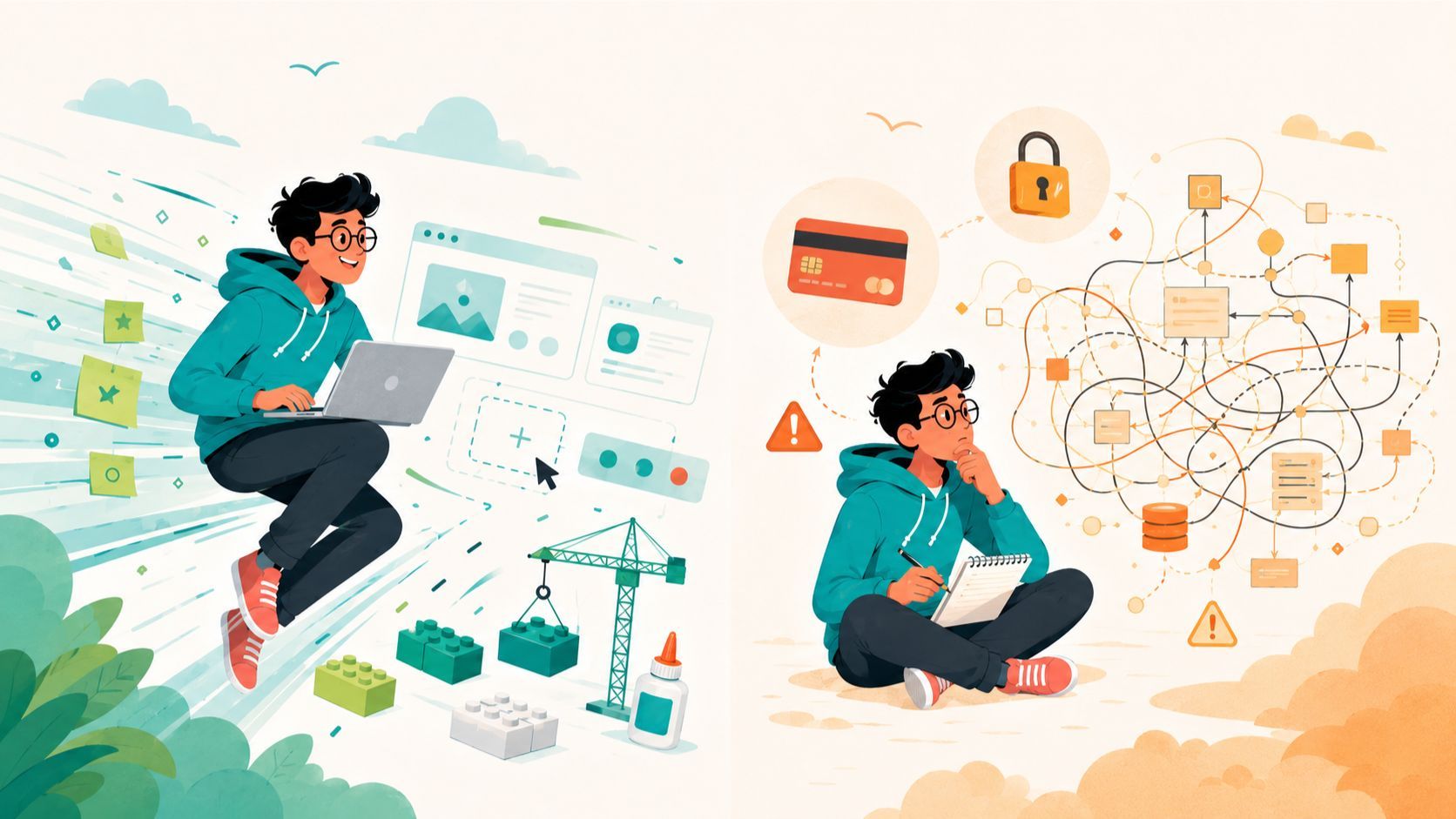
Vibe coding shines when the stakes are low and speed is everything. Think prototypes, demos, and internal tools. Some teams report building working prototypes up to 10 times faster this way. Tasks that took weeks can take hours.
It is also great for the boring 80%. Scaffolding. Config files. Repeat UI components. Glue code that joins two systems. Marketing pages. Simple dashboards. This is work that is easy to check and cheap to get wrong. Let the AI do it, and save your brain for the hard parts.
Vibe away here: prototypes & demos · internal tools · boilerplate & scaffolding · glue code · marketing pages & simple dashboards.
Slow down and engineer: security & authentication · payments & user data · core architecture · tricky edge cases · health, finance, and law.
In short: if a bug here would cost you an afternoon, vibe away.
Where it quietly destroys you
Now the part people skip.
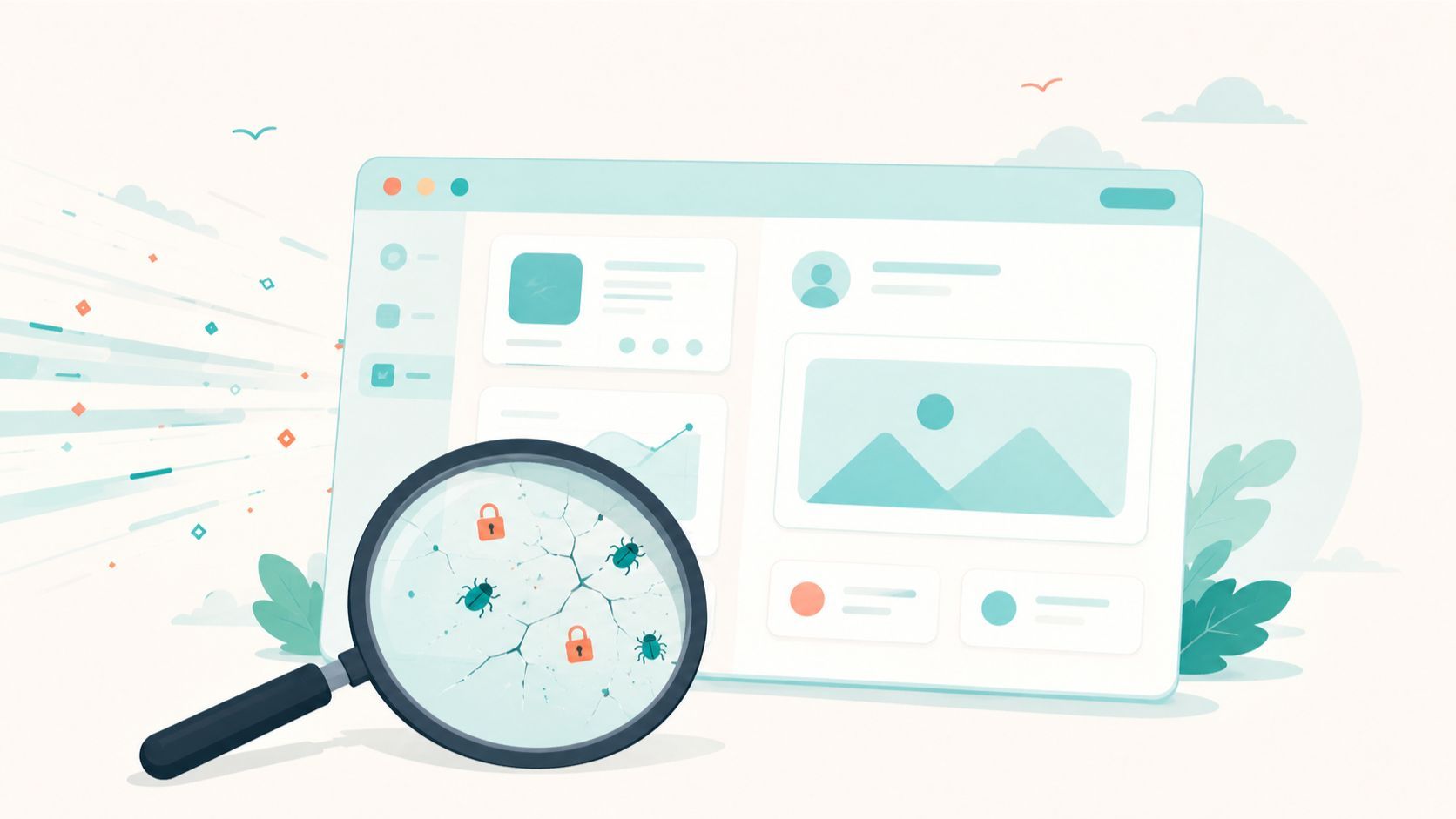
The danger is not bad code that fails loudly. The danger is code that looks fine, runs fine, and is quietly broken. You only find out later, often at the worst time.
Security is the clearest example. The data here is not subtle. One Q1 2026 review of more than 200 vibe-coded apps found that 91.5% had at least one security flaw. A separate report found that 62% of AI-generated code ships with a vulnerability. Researchers have shown AI code is far more likely to be open to attacks like cross-site scripting. Tracked security bugs tied to AI code rose from 6 in January 2026 to 35 by March.
Edge cases are the next trap. AI writes the happy path well. It handles the case you described. But real users do strange things. They paste emojis. They lose signal mid-payment. They send a date from the year 1900. AI often misses these, because you did not ask. And edge cases are exactly where money and trust leak out.
Architecture is the third. AI is great at small pieces. It is weak at the big picture. It does not know your system, your scale, or your future plans. So it makes choices that work today and hurt in a year. That brings us to the real cost.
The hidden bill comes later
Speed now can mean pain later. The numbers back this up.
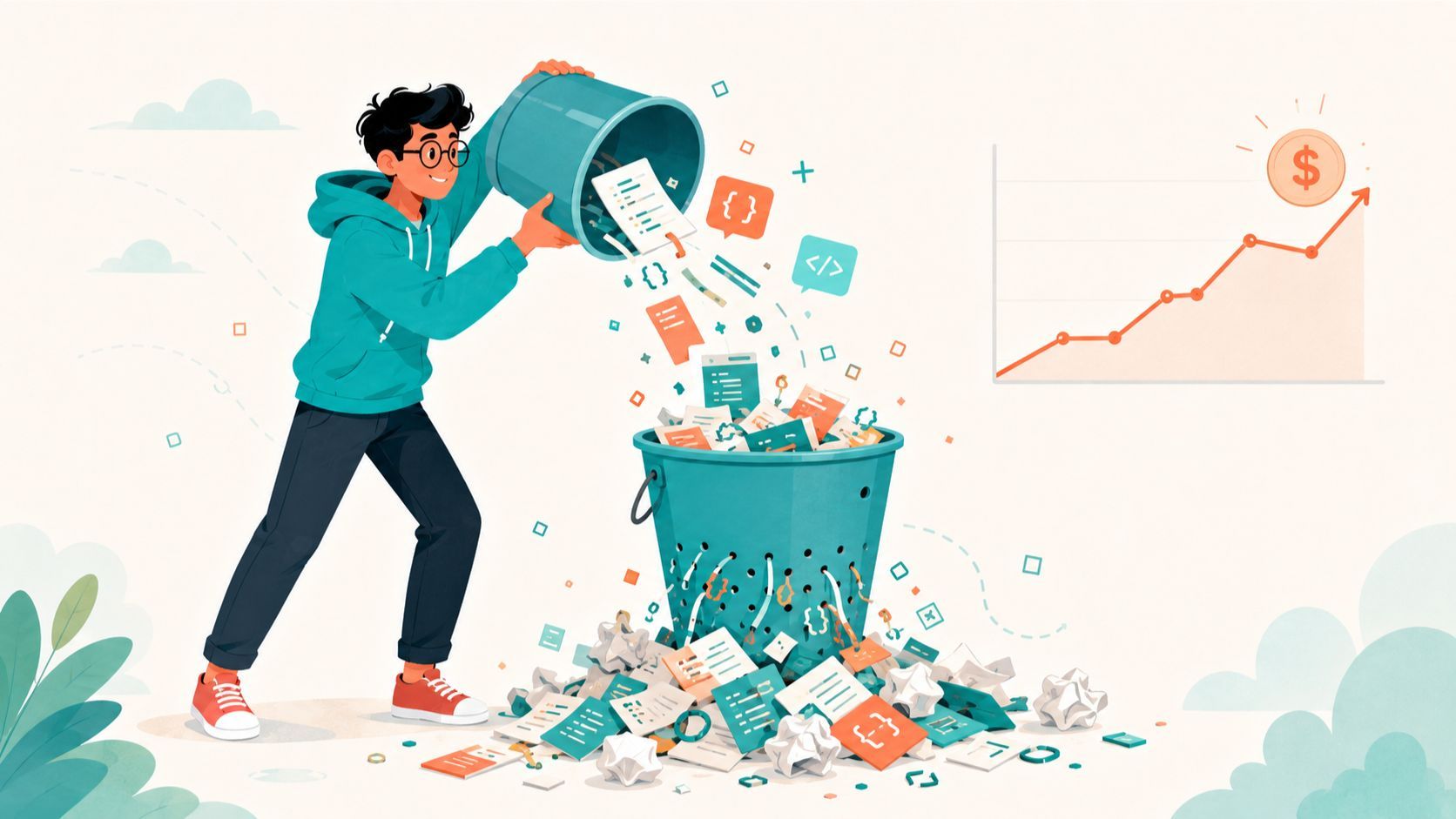
GitClear studied over 200 million lines of code. They found that since AI tools went mainstream, "code churn" has more than doubled. Churn means code that gets written and then thrown away soon after. They also found 4 times more copy-paste and far less clean reuse. In plain terms: more code, lower quality, more waste.
One study found a 41% rise in bug rates after teams adopted AI tools. Another estimate suggests that by year two, messy AI code can push maintenance costs to 4 times the normal level. You did not save time. You borrowed it. And the interest is high.
The trap is not the AI. It is shipping what you cannot debug.
Here is the heart of it. The real risk is not that AI writes code. The real risk is that you ship code no one on your team truly understands.
If it breaks, who fixes it? If a hacker finds the hole, who closes it? If the AI made a bad call, who catches it? When the answer is "nobody," you do not have a codebase. You have a black box that happens to work, for now.
There is a skills cost too. Junior developers who lean on AI for everything can stop learning how to debug. They never build the instinct that tells them "this looks wrong." Senior developers gain the most from AI, because they can judge what it gives them. Juniors can lose the most, because they cannot.
How to use vibe coding without the trap

The fix is not to ban AI. That would be silly, and you would fall behind. The fix is to know which 20% of your code can hurt you, and treat that 20% with care.
The rule we follow at TechOrigins:
- Vibe-code the 80% that is safe. Prototypes, glue code, boilerplate, internal tools. Move fast. Let AI carry the load.
- Engineer the 20% that can kill you. Security. Payments. User data. Core architecture. Anything in health, finance, or law. Here, a senior human reads every line and owns the result.
We pair speed with judgment. We use AI to go fast. Then a senior engineer reviews the risky parts, hunts the edge cases, and makes sure the system holds up under load. We do not hand your product to a junior or to a model alone. The people who plan your build are the people who review it. And we stay after launch, so when something breaks, a human who knows the code is there.
That is the whole point. AI is a brilliant assistant. It is a risky author. Used with care, it makes good teams faster. Used on its own, it makes weak code that someone has to face at 2am.
The takeaway
Vibe coding is here to stay, and that is fine. Use it for what it is great at. But draw a hard line around the parts that can sink you. Speed is only a win if you can still steer.
Want speed without the 2am surprises?
We use AI for speed but never ship what we can't explain.
→ Book a 30-min call · See the work
Quick answers
What is vibe coding?
Vibe coding is when you describe what you want in plain words and an AI writes the code. You guide it by feel, often without reading every line. It is fast for low-stakes work but risky for code where security, edge cases, or architecture matter.
How much code is AI-generated in 2026?
Surveys put it at roughly 41% of code being AI-written or AI-assisted. Treat it as a trend, not a precise figure, since many surveys blend "AI wrote it" with "AI helped." The clear point: most new code now starts with a prompt.
Is vibe-coded software less secure?
Often, yes. A Q1 2026 review of 200+ vibe-coded apps found 91.5% had at least one security flaw, and other reports found ~62% of AI-generated code ships with a vulnerability. Security-critical code needs senior human review.
Where should you not use vibe coding?
Avoid leaning on it for payments, authentication, user data, cryptography, core architecture, and regulated fields like health and finance. Use it freely for prototypes, internal tools, boilerplate, and glue code.
How do you use AI coding tools safely?
Split your code by risk. Vibe-code the safe 80% to move fast. Engineer the risky 20% with a senior human reviewing every line and owning the result. Never ship code no one on the team understands.
Sources:
NetCorp - AI-Generated Code Statistics 2026;
Index.dev - Developer Productivity Statistics;
SoftwareSeni - 91.5% of vibe-coded apps have vulnerabilities;
OX Security - Vibe Coding Security;
Cloud Security Alliance - AI-Generated Code CVE Surge;
GitClear via Arc.dev - code churn analysis;